rock paper scissors
Leah Dixon, Melanie Flood, Sharifa lagoon
Opening reception: July 11, 2026
Open through August 9, 2026
ROCK PAPER SCISSORS
Opening reception: July 11, 2026
Open through August 9, 2026
Friend of a Friend is pleased to present ROCK PAPER SCISSORS featuring artists Leah Dixon (New York), Melanie Flood (Portland, OR), and Sharifa Lafon (Denver) with an opening reception to be held Saturday, July 11, 2026 from 7-10 pm.
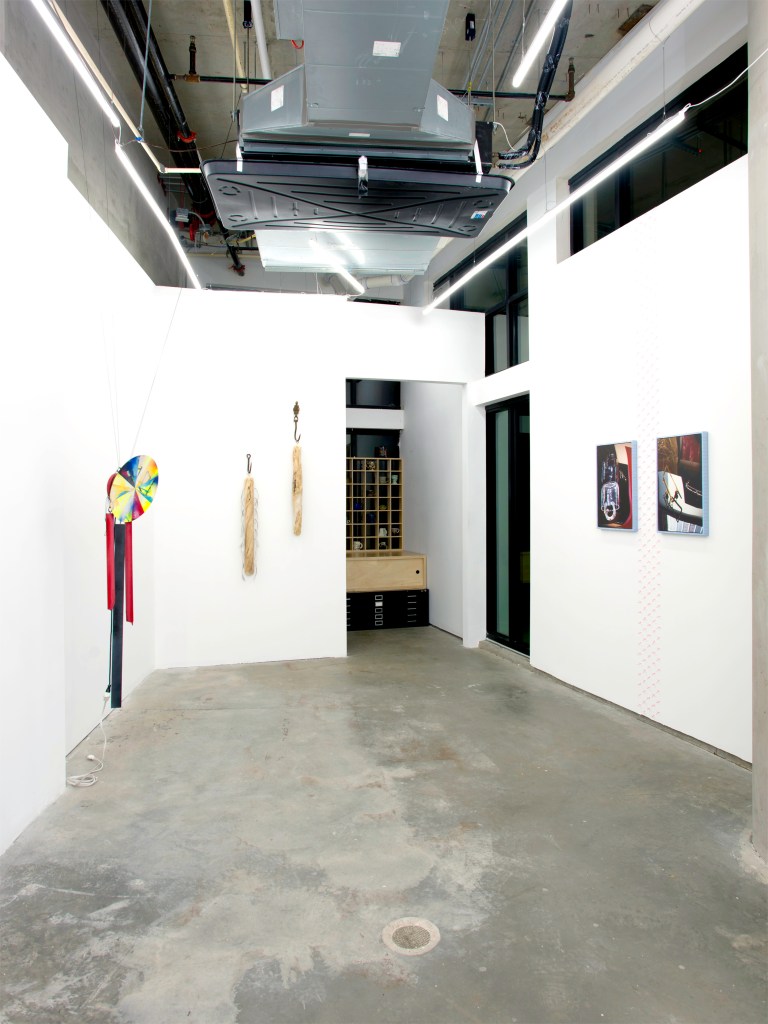
The dual role of artist and exhibition organizer demands a consistent balance where time spent in one arena almost always takes away from another. ROCK PAPER SCISSORS brings together three artists who have been playing this intransitive game for over a decade each. Whether this entails programming a large scale digital motion art festival, establishing a nightlife and global arts institution, or operating a proper artist-run gallery space, a bit of heavy lifting must be done to maintain robust art practices and the results touch on the personal, the global and everywhere in between. We could not be more excited to present a range of sculpture and photography as a roundabout game where choosing a fair option does not produce just winners and losers but instead lifts these artists who accomplish daily triumphs by consistently and diligently manufacturing, opportunities, jobs, and income for others.
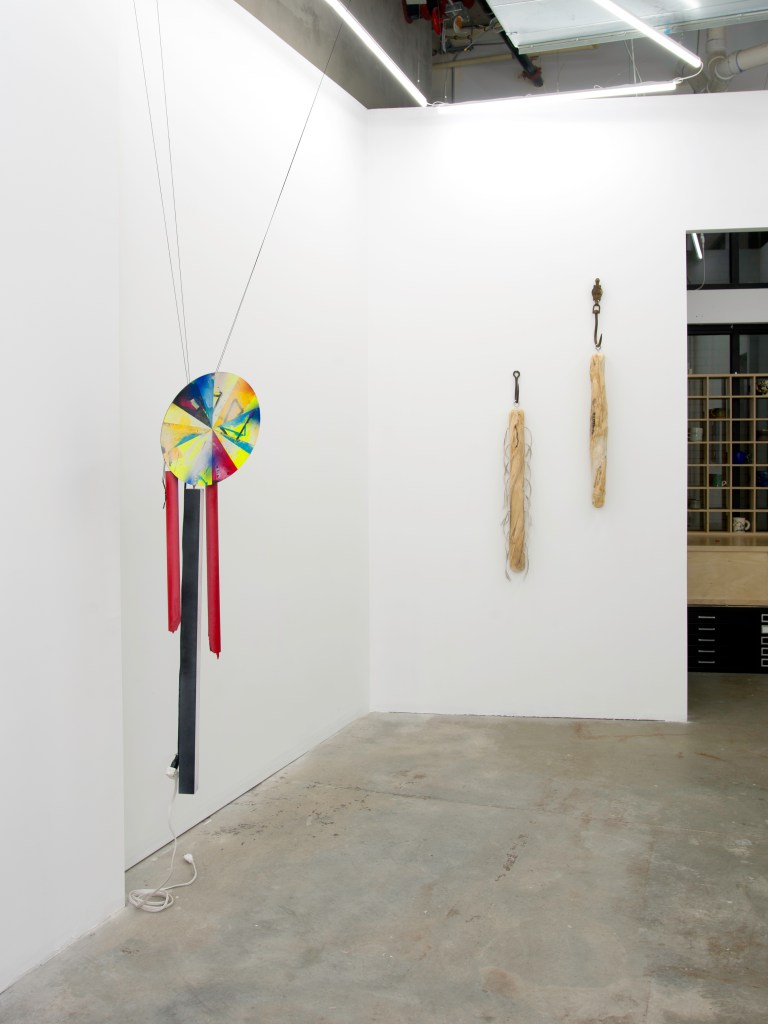
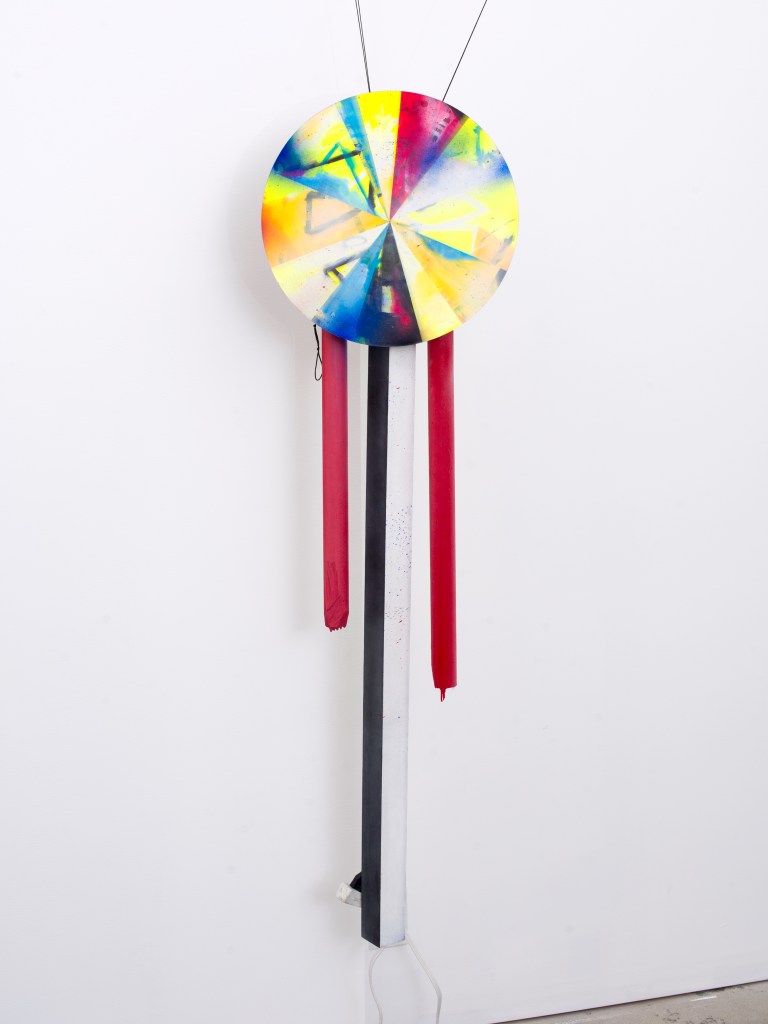
The two works by New York artist Leah Dixon give form to the disembodiment of humans colliding with the architecture of global transportation. Composed by hand with accessible materials, these works nod to the inevitable abstraction that results from human bodies merging with land, space, and changing psychological shapes. Ancient masks and sky gods reflect upon and become turn-of-the-millenium inventions. A helicopter, a rotary motor, batteries and propellers spin awkwardly across the windy horizon – the result of the perfectly man-made geometry that hurls us across atmospheres, into war, into connection and time-travel, while weaving new mythologies at a stratospheric scale.
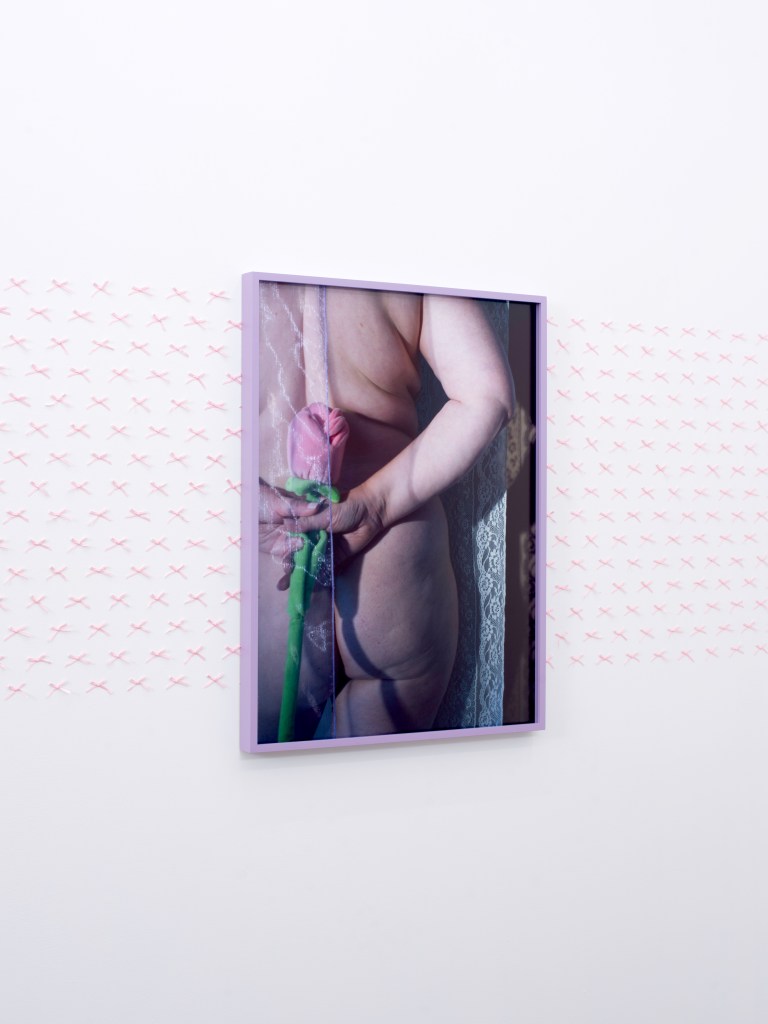
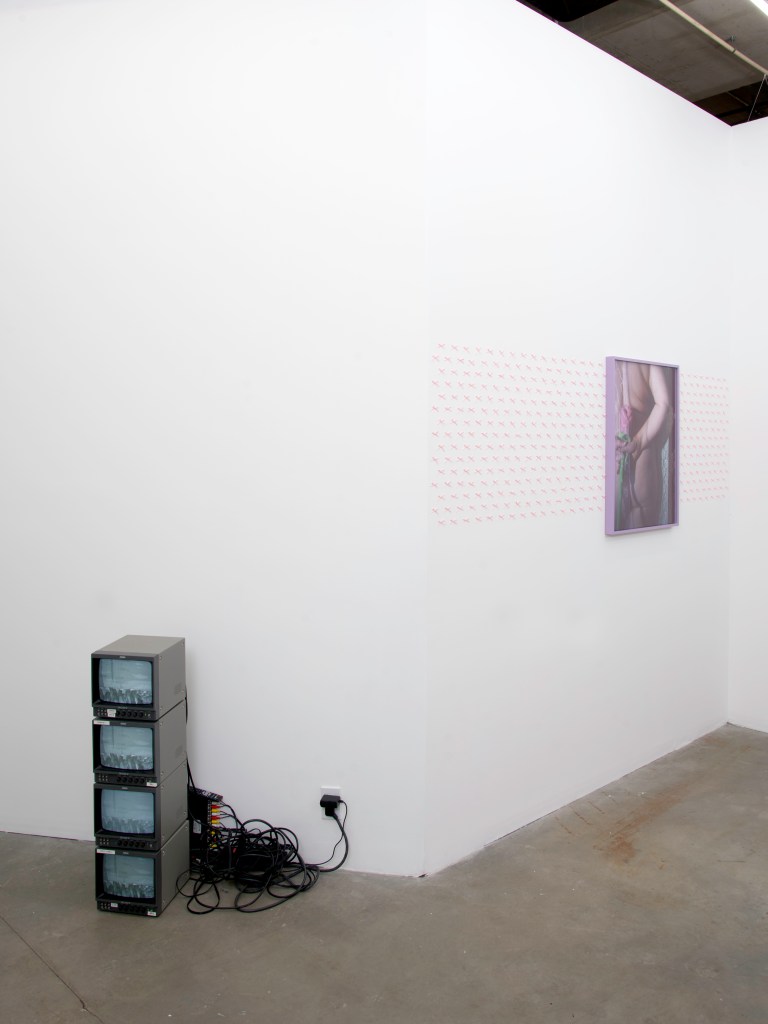
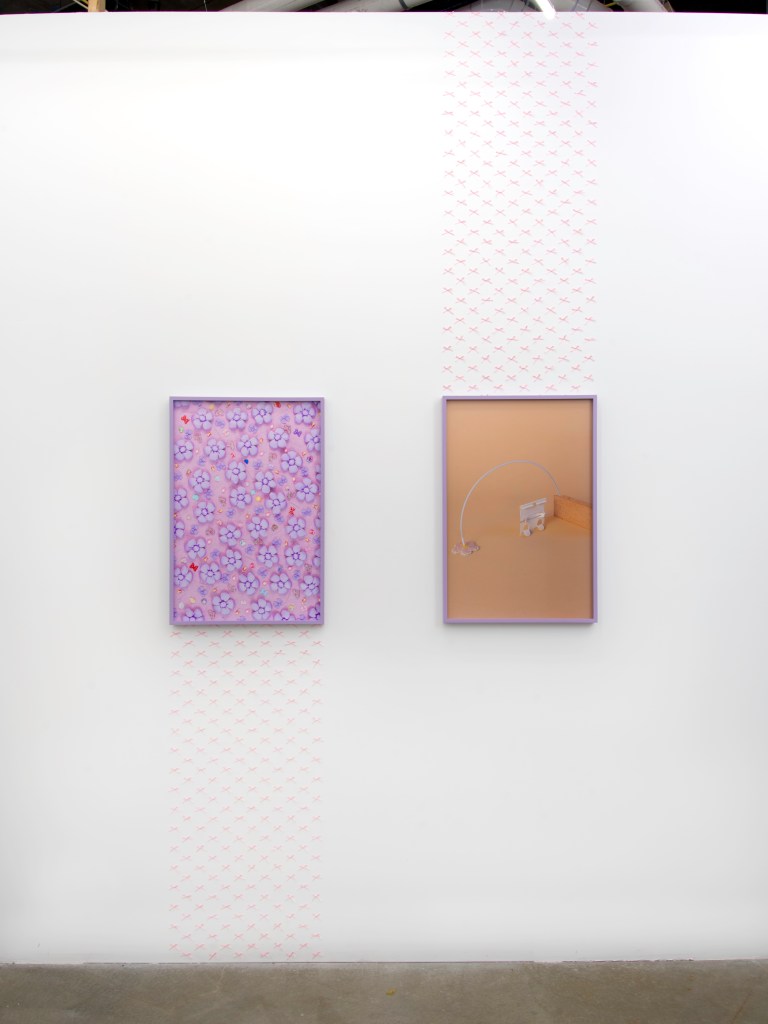
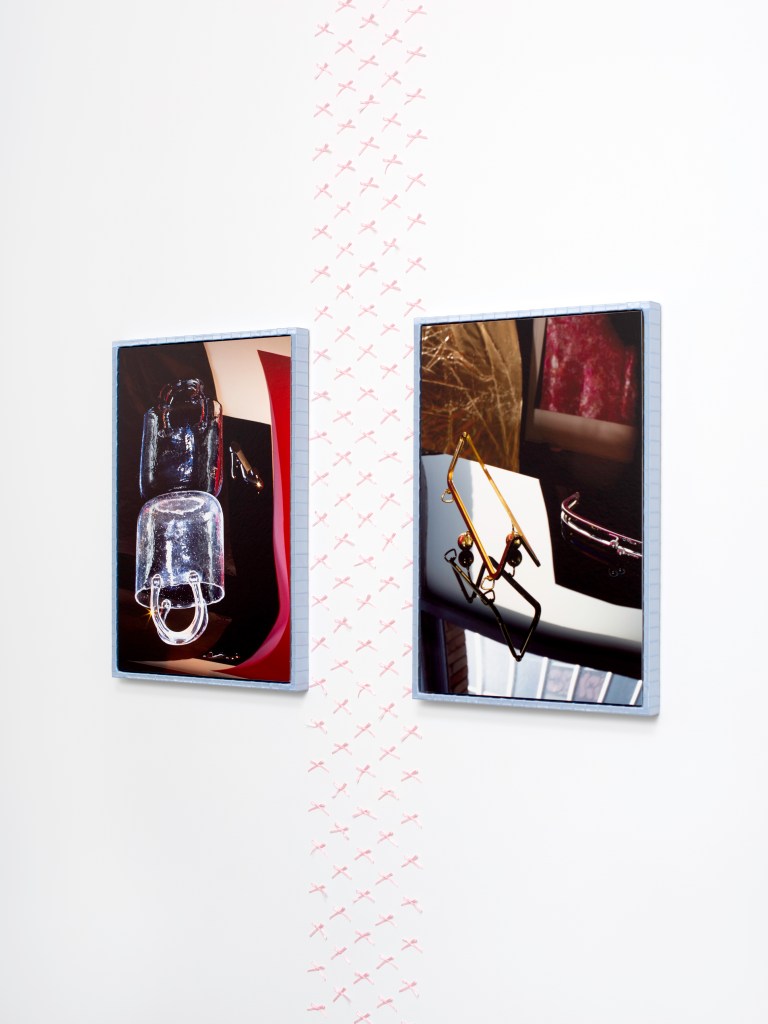
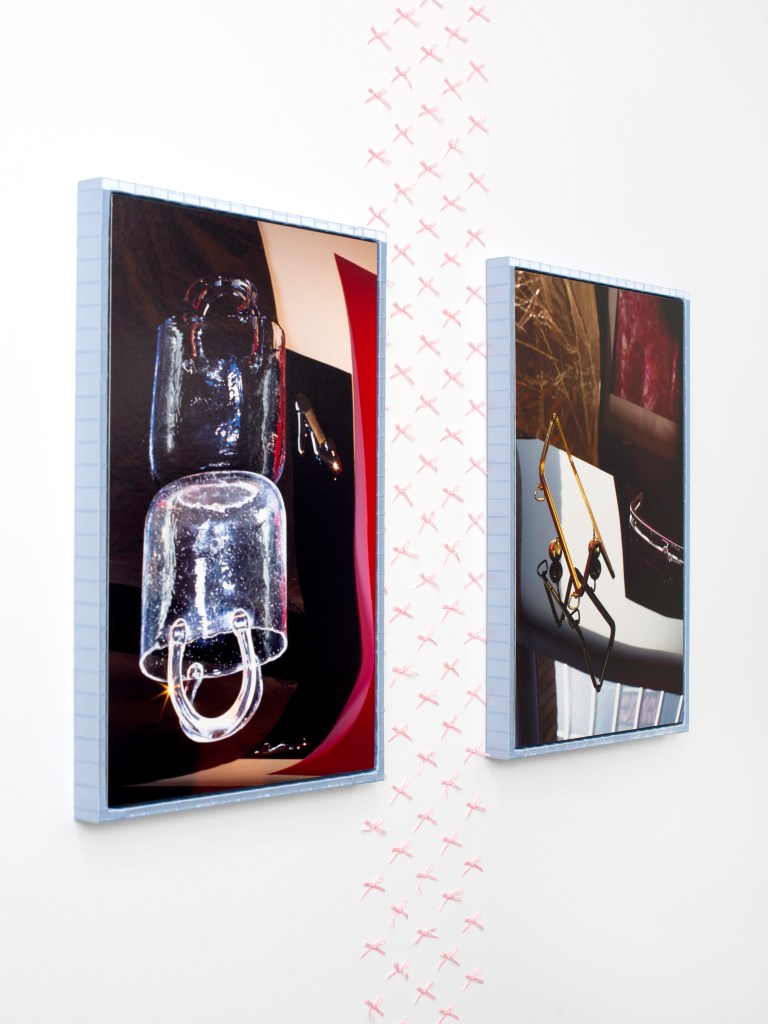
Portland, Oregon artist Melanie Flood looks towards the personal and uses the camera as a tool for self-expression and as a means to make sense of her position in the world. The photographs in this exhibition span her adult life dating back to 2003 when she would make images of different personas that were constructed to attain clout and popularity to the present where staged objects become proxies for the aura of the contemporary femininity still battling ridiculous standards women strive towards. A glass purse reflects within an image, saturated purple flowers and bows gridded among heart-shaped knickknacks with the text “I do” printed on them, and simple neutral colored composition of a piece of wood, beaded flower and earring card pull back the curtain into current personas Flood imagines sans the body. As a backdrop each photograph uses small, pink bows and custom artist frames connecting the works through a lineage of physical and mental maturity that engages the audience with aesthetics often relegated to the superficial.
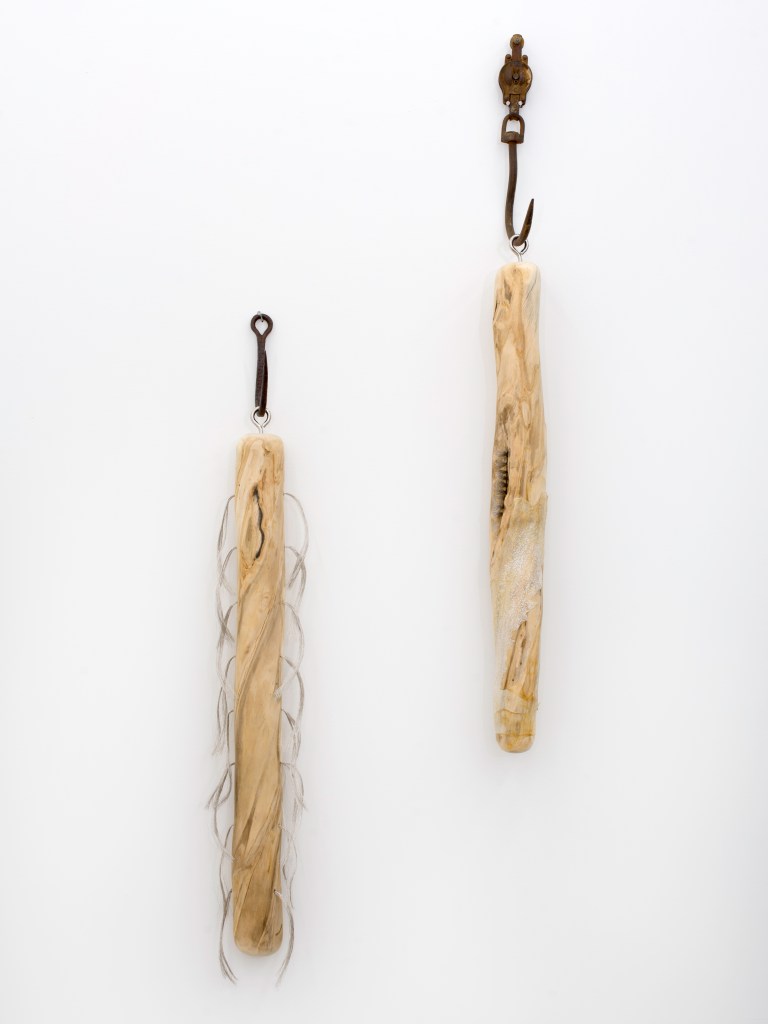
Denver based artist Sharifa Lafon’s practice sits somewhere in between the intimate and global. New and experimental sculptures make use of aspen tree limbs that died of fungal infection and were downed by strong winds in Evergreen, CO where she resides. She painstakingly grinds off the bark of the trees to reveal a meat like texture that has always been inherent to the wood and shows us that the forest is not unlike a human body: a symbiosis of many living organisms that change with age and eventually reabsorbed into circular time. With precision and intention, she interjects metallic thread and hog casing to let the viewer know that she is part of the ongoing cycle. In her video work, Lafon uses various effects to explore metaphor and the artist’s body. By combining traditional 16 mm film techniques, solarization, real time video processing, and the manual manipulation of digital frames, Sharifa explores the perception of her own body and displays them on a stack of CRT monitors mirroring the composition of her hanging sculptures.
____________________________________________________________________________
Leah Dixon (b. Cincinnati, Ohio / Lives and works in New York City) is an Interdisciplinary Artist whose work creates shape from the moments when conflict begins to harmonize. Her wide-scale sculptural and social practice is motivated through spaces where architecture and bodies collide – igniting a shared geometric imagination, in what Dixon points to as our new origin stories. Her Constructivist / Folk methodologies encompass sculpture, painting, performance, minimalist architecture, set design, and nightlife. Dixon is the founder, designer, builder, and creative director of BEVERLY’S – a full bar, a sculpture, social architecture project, and an Arts and Nightlife institution in Lower Manhattan.
Melanie Flood (b. 1979, Queens, NY; lives and works in Portland, OR) employs photography as
a tool for examining how femininity is constructed, commodified, and performed.
Flood has recently exhibited at Adams and Ollman,Portland OR; Schneider Museum of Art,
Ashland, OR; Ruschwoman, Chicago, IL; and Ditch Projects, Springfield, OR. She is a Fall 2026
Creative Exchange Lab Artist in Residence at the Portland Institute for Contemporary Art
(PICA). Her work is the subject of a 2027 solo exhibition at ILY2, New York, NY.
She has received support from the Oregon Arts Commission, The Ford Family Foundation,
Precipice Fund and Regional Arts and Culture Council. From 2008 to 2023, she directed
Melanie Flood Projects, an artist-run exhibition space established in Brooklyn, NY. Her work and
projects have been featured in The New York Times, New York Magazine, and Art in America.
Flood holds a BFA in Photography from the School of Visual Arts, New York, NY, and an MFA in
Contemporary Art Practice from Portland State University, Portland, OR. She teaches
photography in the Schnitzer School of Art + Art History + Design.
Sharifa Lafon (she/her) is a curator and artist working in time-based experimental media. She creates and presents moving-image projects, installations, and public programs that explore perception, embodiment, and interconnection, often through collaborative, community-rooted production. Her work spans exhibitions, screenings, and large-scale projection projects. Sharifa is currently the executive director and curator at Denver Digerati, and the program director and curator of Night Lights Denver. She is currently working on her PhD in the Department of Critical Media Practices at the University of Colorado Boulder and has an MH in Visual Studies with a focus on experimental film, a BA in Art History, and a BFA in Photography from the University of Colorado Denver.


 Friend of a Friend